

Learn How to Choose a Secure and Scalable API Integration Platform

To choose an API integration platform, evaluate eight criteria: ease of use, scalability, API security, monitoring, governance across the API lifecycle, legacy integration, deployment flexibility and AI readiness. The last one is new: AI agents now consume your APIs, so the platform should govern API and AI traffic in one control plane.
Integrating systems through APIs is one of the most effective ways to drive innovation and agility. But as microservices, partner integrations and now AI agents multiply, the wrong platform creates security gaps, inconsistent standards and costly rework.
In this guide, you'll learn:
- What an API integration platform is
- The 8 criteria to evaluate before choosing one
- Why AI readiness is now part of the decision
- How Sensedia approaches API management, integration and AI governance
What is an API integration platform?
An API integration platform is software that connects systems, applications and data sources through APIs, and controls how those APIs are designed, secured, published and monitored. It lets internal systems, partners, apps and AI agents exchange data efficiently, securely and at scale.
How to choose an API integration platform: 8 criteria
1. Is the platform easy to adopt?
The platform should be easy to implement and intuitive for your teams. User-friendly interfaces, clear documentation and responsive support shorten implementation time. Look for intuitive dashboards, process automation and protocol mediation for REST, SOAP and GraphQL.
The Sensedia approach: Sensedia API Management combines low-code/no-code tools and an AI Copilot for API design with code-level extensibility, and mediates REST, SOAP and GraphQL traffic.
2. Can it scale with your API program?
As your company grows, the platform must keep up with a larger API catalog and higher traffic without compromising performance. Check whether it can add capacity horizontally and run gateways where your workloads are.
The Sensedia approach: Sensedia separates the control plane from the data plane. The control plane runs as SaaS, while gateways can run in SaaS, Kubernetes, on-premises or multi-cloud environments, with the same governance everywhere.
3. What API security features should you require?
- Authentication and encryption
- Access control and threat protection
- Traffic protection
- Compliance support with regulatory requirements like LGPD and GDPR.
The Sensedia approach: Sensedia integrates advanced security features into its APIs, including multi-factor authentication (MFA), end-to-end encryption, and role-based access control (RBAC), ensuring your data is always protected.
4. Does it give you real-time monitoring and API analytics?
A good platform offers real-time monitoring, custom dashboards and alerts, so teams can find bottlenecks, reduce errors and protect the user experience.
The Sensedia approach: Sensedia provides API dashboards and Analytics for visibility into the performance and health of your APIs and integrations.
5. How does it handle API governance and lifecycle management?
API governance means applying consistent standards for security, versioning and operation across every API, from design to retirement. Without it, each team builds APIs its own way. Essential features include versioning, separate environments, testing sandboxes and a developer portal.
The Sensedia approach: Sensedia offers a complete API governance solution, with versioning capabilities, access control, and a developer portal that facilitates collaboration and transparency throughout the API lifecycle.
6. Can it integrate your legacy systems?
The platform should expose legacy systems as modern APIs without rewriting the backend, using protocol mediation and ready-made connectors.
The Sensedia approach: we offer solutions that easily integrate REST APIs with legacy systems, enabling smooth and efficient application modernization.
7. Does it support your deployment model?
Regulated industries and global companies often need data to stay in specific regions or on their own infrastructure. Choose a platform that supports SaaS, hybrid and on-premises deployments under one governance model.
8. Is your API integration platform ready for AI agents?
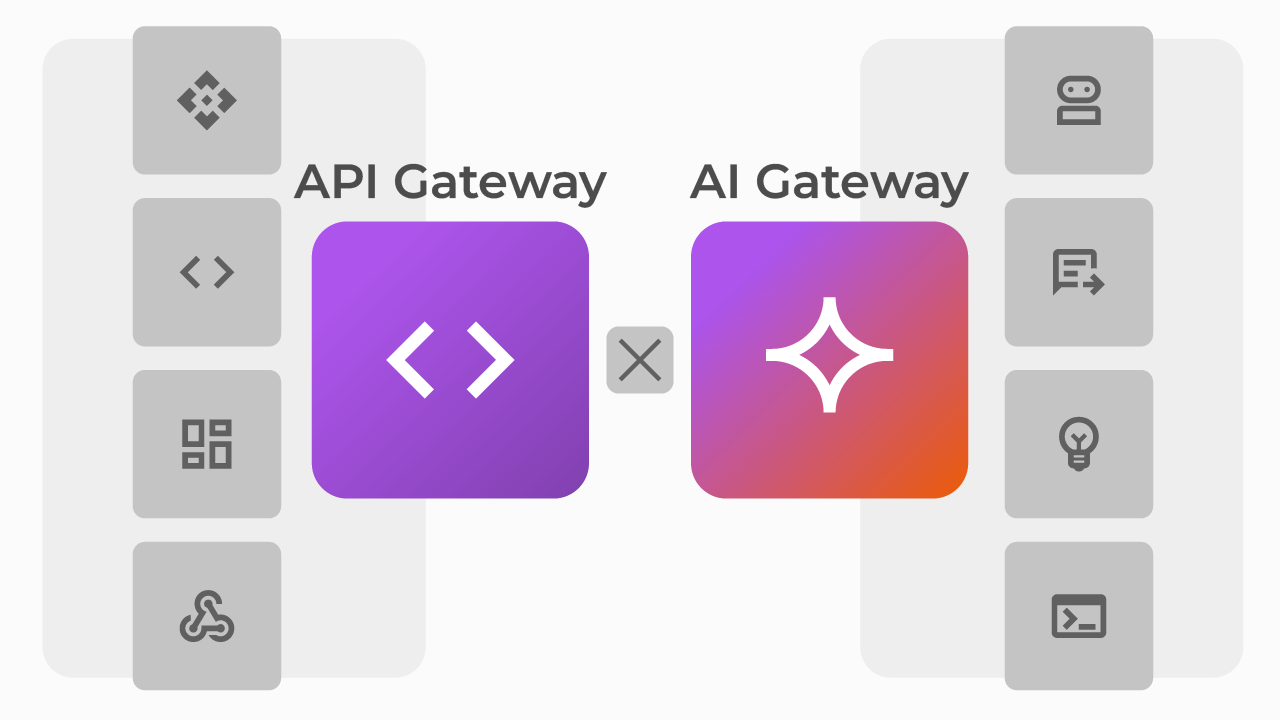
To unify API and AI traffic governance in one control plane, use a platform that pairs an API gateway with an AI gateway under the same security, access control and observability policies. That way, the rules that protect your APIs also apply when AI agents and LLM apps consume them.
AI agents are becoming a new class of API consumer. They call your APIs, send data to LLM providers and use tools exposed through MCP (Model Context Protocol). If AI traffic runs outside your API platform, you get a second, ungoverned integration layer. That's why AI API management is becoming part of the platform decision. Check whether the platform can:
- Govern AI traffic through an AI gateway (also called an AI agent gateway or LLM gateway)
- Control AI agent access to enterprise data with the same access control and audit trail used for APIs
- Turn existing APIs into tools for AI agents (MCP Servers) without rewriting applications
- Monitor AI usage with standard telemetry such as OpenTelemetry
What are the benefits of an API integration platform for your business?
- Agility: adapt quickly to market changes by reusing APIs
- Lower cost: automation and reuse reduce development and operational effort
- Better user experience: customers get consistent access to integrated services
- Faster innovation: launch new digital products, partnerships and AI use cases sooner
- Stronger security: centralized policies protect integrations, corporate data and AI usage
Discover Sensedia’s Solutions for API Integration
Sensedia offers a complete platform designed for the complex needs of modern enterprises:
API Management
Create, manage, and optimize APIs efficiently. With advanced security and analytics, our solution ensures APIs operate with maximum performance and reliability.
Through this platform, your company can monitor all interactions between systems, simplify API governance, and gain crucial insights into the performance of your integrations.
Sensedia Integrations
A solution for complete integration flows, facilitating connections between different applications, systems, and data through a flexible and scalable environment.
Microservices
For companies adopting microservices-based architectures, Sensedia offers full support, enabling the development and management of modular and scalable applications.
Our platform facilitates the integration of independent systems, allowing your organization to benefit from the flexibility and scalability that microservices architecture offers.
Event-Driven Architecture
Sensedia's event-driven architecture allows your company to process and react to events in real time, providing unparalleled operational agility. With this approach, your organization can quickly adapt to changes and new business requirements, maintaining the performance and integrity of integrations.
Sensedia AI Gateway
Govern AI traffic from apps and agents to LLMs and MCP Servers, with the same governance as your APIs.
Choosing the right API integration platform is an essential step toward digital growth. Want to know how to transform your operations? Explore Sensedia’s solutions and discover how our API Management platform can help your business scale securely and efficiently.

Begin your API journey with Sensedia
Hop on our kombi bus and let us guide you on an exciting journey to unleash the full power of APIs and modern integrations.

Embrace an architecture that is agile, scalable, and integrated
Accelerate the delivery of your digital initiatives through less complex and more efficient APIs, microservices, and Integrations that drive your business forward.


