

Open Banking
Ignite Open Banking with Ready-to-Use FDX APIs
As global leaders in open banking, we leverage APIs to connect directly to open banking ecosystems, driving innovation beyond regulation. Sensedia provides ready-to-use FDX APIs that unlock out-of-the-box compliant solutions for banks, credit unions, and fintechs, all in line with CFPB regulations.


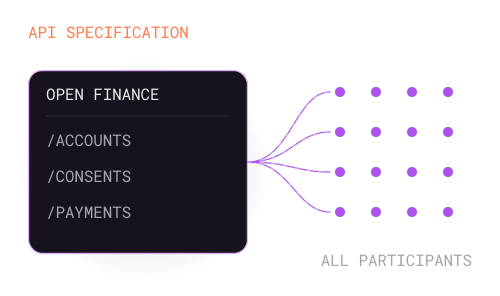
Open banking with FDX Standards: ready from day one
With Sensedia's API platform and turnkey FDX solution, financial institutions can connect to Open Banking ecosystems, bypass data aggregators, and prepare for CFPB Section 1033 compliance—all in one platform.
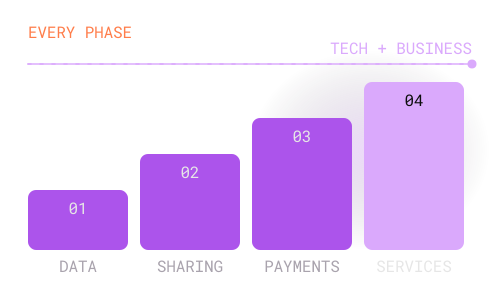
We are experts in open and embedded finance ecosystems
Clients and partners leverage Sensedia's platform to accelerate innovation, build, and connect innovative banking products and embedded solutions delivered exactly when and where they are needed.
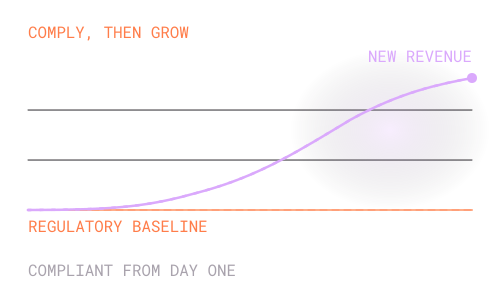
Accelerate open banking and CFPB 1033 compliance for all
Sensedia is the top choice for fintechs, banks, and credit unions seeking direct connections, bypassing data aggregators to unlock the potential of legacy systems and stay ahead of the competition.
Open Banking Basics: A Crash Course for Banks and Credit Unions
Sensedia provides a turnkey solution built on FDX standards, emphasizing the vast opportunities it offers banks, credit unions, and fintechs.

Simplifying integrations to focus on client innovation
Real-life success stories demonstrating the practical application of our solutions.






Our experts are global leaders in open banking
We collaborate closely with you on API design and implementation, meeting CFPB compliance and security certifications, consent management, and conducting sandbox testing. This partnership ensures an accelerated and seamless adoption of Open Banking best practices, free from surprises.


Scale your business through embedded finance
We manage the complexity of handling customer data across various institutions, allowing you to concentrate on innovation and the development of new embedded solutions.
Build and manage open partnership ecosystems
Leverage our interactive dashboards to access detailed API data and user consent records, efficiently manage certificates and maintenance, and streamline partner integration and onboarding—all aligned with our commitment to enhancing financial services and compliance.


Innovative solutions that go beyond CFPB compliance
Designed for security, scalability, and interoperability, Sensedia's API platform delivers ready-to-use support compliant with Consumer Financial Protection Bureau (CFPB) directives on data privacy and user consent, such as the FDX API standard, ensuring robust protection and seamless integration.
Begin your Open Banking journey today
Leveraging Sensedia's technical expertise and a mature Open Banking platform, you can seamlessly enter the Open ecosystem and explore new business opportunities.
Discover our entire suite of products


Adaptive Governance
Ensure the security and flexibility of your architecture with confidence.

Frequently asked questions
Find the answers to the most common questions about our Open Banking platform.
Open banking lets consumers and businesses share their financial data with the apps and services they choose, through secure APIs instead of shared passwords. In the US, it is driven both by market demand and by Section 1033 of the Dodd-Frank Act, which gives consumers the right to access and share their financial data. Banks and credit unions act as data providers, while fintechs and data aggregators access that data with the consumer's permission.
The Consumer Financial Protection Bureau (CFPB) finalized its Personal Financial Data Rights rule in October 2024, requiring covered institutions to make consumer data available through secure developer interfaces. As of October 2026, a federal court has barred the CFPB from enforcing the rule while the agency reconsiders it, and a revised proposal is under review. Key points such as data access fees and third-party requirements may change, so institutions are preparing with standards-based APIs that will work under either version of the rule.
Under the 2024 rule, depository institutions with more than $850 million in assets were covered, with compliance dates phased in by size, from April 2026 for the largest institutions to April 2030 for those between $850 million and $1.5 billion. Those dates are currently on hold while the rule is enjoined and under reconsideration. Even without an enforced deadline, consumers, fintechs and aggregators already expect API-based access, and large banks have moved away from screen scraping.
FDX is a nonprofit standards body in the US and Canada that maintains the FDX API, a common standard for sharing consumer and business financial data. In January 2025, the CFPB recognized FDX as the first standard-setting body under Section 1033. Adopting the FDX API means one interface that fintechs and aggregators already support, instead of a different integration for each partner.
With screen scraping, third parties log in with the consumer's username and password and copy data from online banking, which creates security and liability risks. With an FDX API, the consumer authorizes access through the institution's own login and consent screen, the third party receives a token instead of credentials, and the institution controls what data is shared, with whom and for how long, with the option to revoke access at any time.
Aggregators remain an important channel, since most fintech apps connect through them. The difference is how they connect: through your FDX API, with your consent rules and your security controls, instead of scraping your website. Sensedia's platform lets you expose the same API to aggregators and to fintechs that want a direct connection, and manage every partner from one place.
The 2024 rule prohibited fees for data access, but that is one of the points under reconsideration, and some large banks have already signed pricing agreements with aggregators. An API management layer lets you meter and report usage by partner, so you are ready for either outcome.
Sensedia provides ready-to-use FDX APIs on top of its API Management platform, with consent management, a developer portal for third-party onboarding, security policies and real-time observability. Our Open Ops team supports the operation after go-live, monitoring availability and performance and keeping the APIs aligned with new FDX versions and regulatory changes.
Integration is one of the biggest challenges for banks and credit unions. Sensedia connects FDX APIs and consent flows to your existing core and digital banking systems, in hybrid and legacy environments, so you can offer open banking without replacing your core and evolve your architecture at your own pace.
Sensedia combines OAuth 2.0 and OpenID Connect authorization, consent management, encryption, API security policies and continuous monitoring, aligned with FDX security guidelines. The same foundation supports large financial institutions in high-volume, mission-critical operations.
Sensedia has worked with open banking and open finance ecosystems across the Americas and Asia, including the United States, Brazil, Chile, Colombia, Peru and Malaysia. In Brazil, one of the most advanced open finance markets in the world, Sensedia has supported the ecosystem since its early phases as a trusted advisor to the Central Bank and works with large banks, fintechs and credit unions. Visit our customer stories to see results with banks and credit unions.
Why choose Sensedia?
We have been closely monitoring Open Banking since its inception and actively involved in its evolutionary agenda. Our unrivaled expertise in this market-disrupting initiative enhances the experience of our clients in the financial sector.


