

Why Does Your Company Need an AI Gateway?

One of the pillars of artificial intelligence at Sensedia is the AI Gateway, providing our clients with governance, security, and scalability in the consumption of AI models via APIs. In this chat, you will understand why this tool is gaining increasing prominence in integration strategies, which business problems it addresses, and how it optimizes corporate operations.
Providing the insights are two experts from Sensedia’s Solutions team: Igor Guimarães and Lucas Xavier.
What is an AI Gateway, and why is it a highlight lately?
Xavier: The AI Gateway can be understood as a natural evolution of the API Gateway, but with a specific focus on the consumption of AI models.
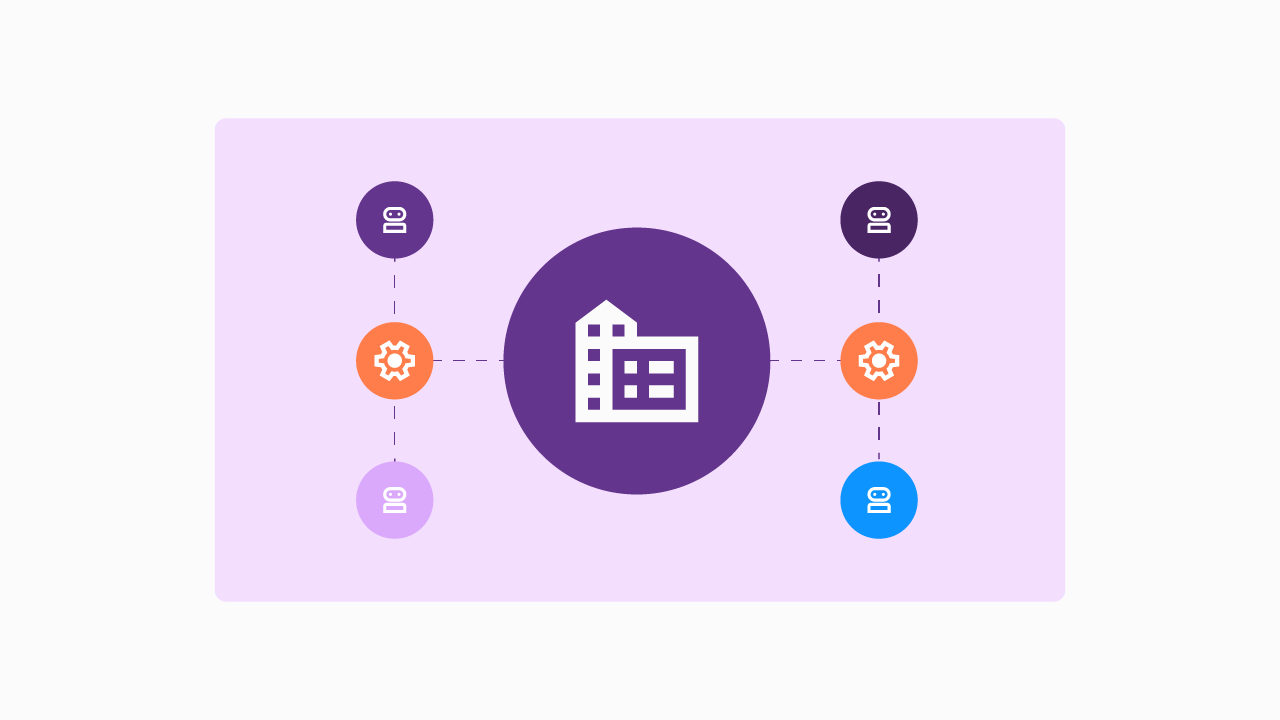
Today, we see companies connecting Copilots, autonomous agents, intelligent automations, and apps that are heavily dependent on inference language models. Each of these consumption points generates intense traffic, unpredictable consumption, and operational risks. It’s natural for a specialized layer to emerge to organize all of this, and that is the role of the AI Gateway. It acts as an intelligent proxy for AI models, abstracting these providers, creating security policies, managing failures, and even offering specialized monitoring.
To reinforce the urgency of this topic, it’s worth noting that in the 2025 Gartner Hype Cycle, AI agents and AI-ready data are identified as the fastest-growing technologies. This shows that companies are moving from the experimentation phase to real demands for implementing and operationalizing these agent models.
Consequently, tools like the AI Gateway become essential. Without this orchestration layer, risks arise such as: vendor lock-in without flexibility; outages caused by model unavailability; and unexpected costs, even for controlled use. The AI Gateway was born as a bridge between innovation and governance. It ensures that AI use doesn't become chaotic, but rather remains scalable, controlled, and reliable.
What are the main practical problems the AI Gateway solves?
Igor: Regarding usage, the problems end up being the same as those of an API Gateway. A maintenance layer is needed to handle non-functional requirements that, theoretically, would be absorbed by the layers below. Technically, the AI Gateway’s role is to extract information to generate data observability, ensuring access for the right people, and feeding metrics, volumes, and ways to control cadence and manipulate routes.
Regarding the security layer, we centralize access keys and other features that would otherwise be exposed or scattered. This also allows for cost management, as it's possible to know exactly who is consuming the service and what the cost will be. Control over these points is what this layer enables. Versioning between agents and controlling API exposure—even via the MCP (Model Context Protocol) Server—are problems we mitigate by using this layer to manage content and establish a standard.
How does the AI Gateway impact business strategies?
Xavier: It has a direct impact because it transforms AI consumption into a strategic asset, whereas before it was something experimental. Companies that use AI without governance end up limited to isolated pilots. With an AI Gateway, you can standardize access to different models, create usage policies for different teams, and even monetize these AI APIs. You can treat these APIs as a brand-new service.
Features like AI API tools, Agent-as-an-API, and connectors for data sources allow a company to expose internal capabilities to third-party Copilots or agents in a controlled manner. This creates several new business opportunities, such as API monetization. You can also offer data APIs or proprietary functionalities to partners within an AI ecosystem.
Another point is compliance and auditing. Every interaction is recorded, which is essential in regulated sectors like the financial market. In the medium term, this governance accelerates innovation because it allows teams to consume AI resources securely and at scale, without the fear of hitting security barriers along the way.
Igor: When we talk about AI in companies, I believe we must stop treating it like a laboratory—that’s in the past; projects have already taken shape. These technologies are already at a production-level stage. The AI Gateway creates a layer that enables governance and the management of AI as an asset. This entire transformation journey will ultimately drive the use of AI forward.
How is Sensedia positioning itself in this scenario?
Xavier: Our proposal is to offer a layer that combines flexibility for innovation with robustness for governance. The market has a range of needs regarding agent-to-agent proxies, app exposure, AI agents, context access, RAG (Retrieval-Augmented Generation), long-term memory, and integration with frameworks like LangChain and AutoGen. We bring all these functionalities into our stack without losing observability.
We deliver more than just technical features in a "black box." Sensedia’s differentiator is helping companies design an AI governance strategy, preventing consumption from becoming a cost or risk bottleneck and transforming it into business value.
At the end of the day, we know that AI agents are only as good as the data they consume, so we prepare the entire integration and data architecture so these agents can perform at their best.
How will the AI Gateway evolve? What will its role be in business moving forward?
Igor: The AI Gateway will be essential for ensuring governance, security, and compliance in the context of AI. Anything enabled via AI that is used at scale will need a tool to manage those assets; otherwise, it will be a mess. This asset will provide connectivity between agents and allow the exposure of information through new protocols. Companies will need to expose and consume new models every day. I think the most important thing is understanding how to monetize it and how the AI Gateway economy will enable the exploration of this new market feature.
Xavier: The AI Gateway is not just a technical layer, but the foundation that transforms AI into a strategic, secure, and scalable resource within companies. It will organize, govern, and, above all, amplify the consumption of models and agents. It will ensure cost efficiency, accelerated innovation, and new business opportunities, as well as regulatory compliance.
The future of AI in business doesn't just depend on which models are used, but on how they are integrated, controlled, and transformed into real business value. That is exactly the role of the AI Gateway: the link between technology and concrete results.
Want to know how AI is embedded in Sensedia’s solutions? Visit our AI Adoption page!

Begin your API journey with Sensedia
Hop on our kombi bus and let us guide you on an exciting journey to unleash the full power of APIs and modern integrations.

.png)


Embrace an architecture that is agile, scalable, and integrated
Accelerate the delivery of your digital initiatives through less complex and more efficient APIs, microservices, and Integrations that drive your business forward.


.svg)