

AI Gateway: What It Is and How It Enables AI Governance
.png)
The rapid expansion of corporate AI implementations has highlighted limitations in traditional infrastructures, as operationalizing the consumption of complex models requires more advanced tools than conventional network management. Scenarios like this increasingly underscore the importance of adopting an AI gateway within enterprises.
When data engineers and software architects identify the need for an AI gateway, they are looking for a central layer capable of managing, routing, and protecting all inference traffic. This layer abstracts the complexity of the corporate backend and ensures that rigorous control and governance policies keep pace with the development of new algorithms.
Furthermore, mission-critical systems demand high resilience, as the routing of inference requests must maintain stability even under high-demand conditions. In this context, understanding what an AI gateway is and mastering its architectural role becomes fundamental to the success of machine learning pipelines in production.
What is an AI Gateway?
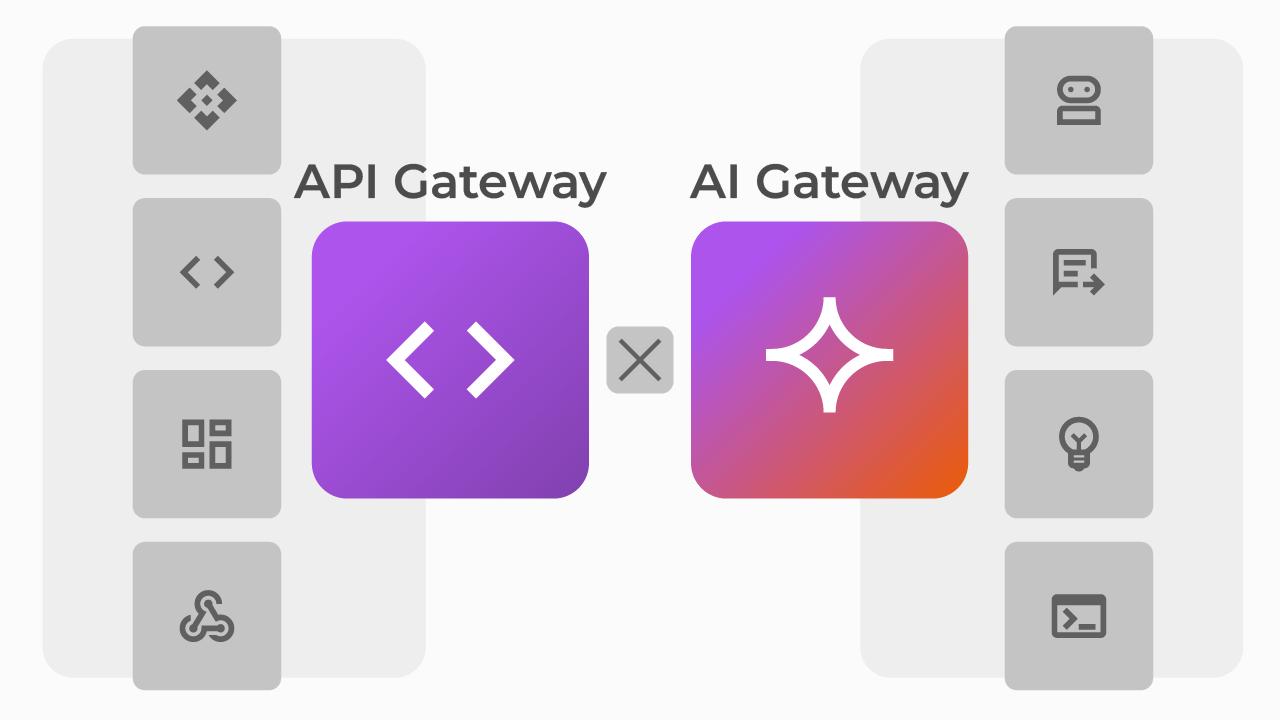
An AI gateway is an intelligent layer between AI agents, APIs, systems, and LLMs, providing mediation, governance, security, orchestration, and observability for the safe and scalable use of AI. It transforms the complexity of orchestration and inferences into accessible endpoints, allowing for rigorous control over usage policies and model performance at scale.
Its AI-focused abstraction layer considers complex metrics, such as token consumption and specific characteristics of machine learning workloads. Routing becomes more intelligent, allowing different AI services and infrastructures to connect according to the application's needs.
Components and Architecture of an AI Gateway
Building resilient architectures requires detailed control over data flow. Therefore, the architecture of an AI gateway typically rests on five main components:
- Intelligent Routing: Traffic is directed to different inference services based on contextual rules. The layer evaluates factors such as latency, availability, and computational cost before forwarding each request.
- AI Endpoint Abstraction: The solution centralizes access to multiple AI providers. Internal models and external APIs can be consumed through a single integration point.
- Security and Compliance Policies: The AI gateway intercepts traffic to apply robust authentication, end-to-end encryption, rate limiting, and granular access control.
- Observability and Usage Metrics: Advanced telemetry features allow for detailed logging and tracking of performance indicators, such as inference latency and availability.
- Model Versioning Management: Updates between different model versions can be performed without service interruption. This enables canary tests, A/B testing, and controlled rollbacks.
Related Content: How the AI gateway facilitates the use of multiple LLMs in companies.
Why is an AI Gateway Essential for AI Strategies?
Maintaining control over distributed architectures requires consistent governance, and an AI gateway allows for the centralization of security policies to ensure compliance with privacy regulations, such as the LGPD (General Data Protection Law).
Additionally, the security layer protects AI APIs against adversarial attacks and resource misuse. Real-time traffic and consumption monitoring contribute to reducing operational risks and unexpected costs.
Another important aspect is scalability, as the AI gateway allows AI workloads to be distributed across hybrid or multi-cloud environments, maintaining stability even during demand peaks. Integration with development pipelines also benefits from this architecture; the connection with MLOps practices facilitates continuous deployment and standardizes API contracts, reducing complexity for developers and partners.
Related Content: How AI boosts API and integration strategies.
Practical Applications of the AI Gateway
The implementation of an AI gateway can solve various operational challenges for technical teams:
- Performance-Based Routing: The system monitors instance latency in real-time and automatically directs requests to the best-performing services.
- Security and Compliance in Regulated Environments: In sectors like the financial market, the AI gateway can apply data anonymization before sending information to AI services.
- Third-Party Model Governance: Consumption of AI SaaS services can be controlled through unified policies, centralizing observability and governance.
- Integration with Microservices and Data Pipelines: The architecture allows connecting traditional APIs, data pipelines, and AI engines without deep structural changes to existing systems.
Related content: Why does your company need an AI gateway for AI agent governance?
How to Evaluate and Implement an AI Gateway in Your Architecture
The choice of platform directly influences the robustness of the production operation. Therefore, it is important to evaluate the solution's scalability, support for multi-cloud environments, and compatibility with different AI frameworks. It is also vital to consider the depth of available metrics, as they directly influence integration with MLOps tools.
During implementation, technical challenges may arise: inference latency, conditional routing, and continuous model version management can generate operational complexity. Because of this, initial standardization is essential. Defining clear API contracts and implementing security policies from the beginning of the architecture reduces rework and ensures greater operational stability.
Want to implement an AI gateway in your company and scale AI use with security and visibility? Talk to our experts now!

Begin your API journey with Sensedia
Hop on our kombi bus and let us guide you on an exciting journey to unleash the full power of APIs and modern integrations.

Embrace an architecture that is agile, scalable, and integrated
Accelerate the delivery of your digital initiatives through less complex and more efficient APIs, microservices, and Integrations that drive your business forward.


.svg)