

The AI Integration Blueprint for AI Governance with MCP and Modern API Management

The Trillion-Dollar Problem Every Company Faces
Imagine this: your customer service AI confidently informs a Premium customer that a refund will take "3 to 5 business days," completely unaware that this customer has Platinum status, recently complained about service issues, and is calling during a recognized system outage affecting their region. The AI had access to transaction data but lacked the crucial context that would have transformed that interaction from frustrating to exceptional.
This scenario isn't hypothetical. Companies face a potential annual opportunity of $2.6 to $4.4 trillion through intelligent, context-aware AI systems. The productivity loss at the lower end of this range is already a significant pain point. The culprit? Traditional integration platforms designed for human users trying to serve AI agents, LLMs, and autonomous systems that operate at unprecedented scale and complexity. It’s like trying to fuel a rocket at a gas station—the infrastructure simply wasn't built for it.
Why Your AI Integration Plan Isn’t Working (Yet)
Most companies approach AI integration by adapting existing systems, treating AI applications as web services that just demand a bit more. This creates bottlenecks:
- The Context Gap: AI systems receive fragmented data stripped of the business logic, relationships, and contextual meaning necessary for intelligent decision-making.
- The Scale Problem: AI agents can generate massive volumes of API calls, blowing past standard rate limiting and causing cascading failures across integrated systems.
- The Intelligence Paradox: The "smarter" your AI becomes, the more context it needs to make good decisions. Traditional integrations (without MCP) do not understand context.
The Intelligent Backbone for AI Integration
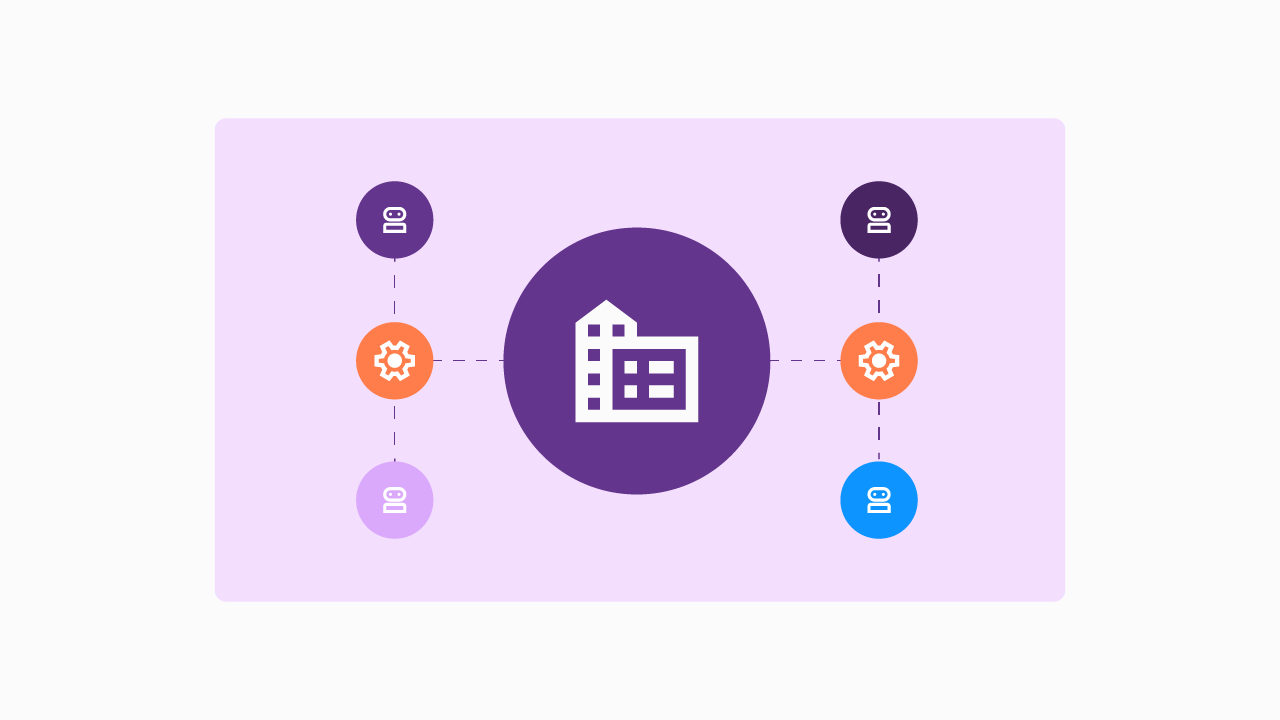
We are building what we call the Intelligent Backbone—a unified platform combining iPaaS (Integration Platform-as-a-Service), AI-powered federated API management, and adaptive governance frameworks. This is underpinned by contextual intelligence specifically designed to integrate deterministic data points with non-deterministic AI systems and agents.
This isn't just an upgrade; it’s a fundamental reinvention of how enterprise data flows, how APIs serve autonomous systems, and how context directs data traffic.
The 4 Pillars That Make It Work
1. AI-Native Integrations
Sensedia Integrations creates intelligent data pathways that interpret unstructured data, understand intent, and orchestrate real-time workflows while working alongside LLMs.
2. AI-Centric Federated API Management
Traditional management assumes predictable, human-driven usage. Sensedia API Management offers context-aware gateways that understand AI request patterns, dynamic rate limiting adaptable to workload requirements, intelligent model versioning, and API monetization strategies designed for AI service providers.
3. Intelligent API Governance with AI Insights
Only AI can effectively govern AI. Adaptive Governance enables automated contract validation, built-in redundancies, and robust risk mitigation by providing full visibility into API impact across your ecosystem. This ensures compliance that adapts to evolving regulations.
4. Model Context Protocol (MCP)
This is where the magic happens. MCP transforms raw data into meaningful context that AI systems can comprehend and utilize effectively.
Related Content: How to Efficiently Use AI to Boost APIs and Integrations
Why Major AI Companies are Betting on MCP
The breakthrough revolutionizing AI integration isn't a proprietary technology, but an open-source protocol developed by Anthropic and rapidly adopted by giants like Microsoft, OpenAI, and Google. This represents a fundamental shift in how AI systems interact with corporate data.
What Makes MCP Revolutionary?
MCP solves the context problem by standardizing how AI systems interact with enterprise data sources. Instead of working with isolated data points, the protocol provides LLMs with structured access to relationships, dependencies, and business logic.
- Customer Journey Context: Full relationship history, preferences, and interaction patterns.
- Business Logic Relationships: How different data elements connect and influence one another.
- Operational Constraints: Current system status, policy limitations, and process requirements.
- Strategic Objectives: How individual decisions align with broader organizational goals.
The transformative impact of MCP is already affecting enterprise AI systems. By providing grounded context, we dramatically reduce AI hallucinations and increase model accuracy, particularly in nuanced and context-rich data-driven tasks.
Deployment cycles become faster, while security and governance benefit from actions that are governed directly at the protocol level.
Implementing Your MCP Strategy
Successful MCP implementation requires strategic thinking across four phases:
- Context Mapping: Identify critical contexts. What information transforms data into insights? Focus on customer interactions and decision-making flows.
- MCP Server Deployment: Implement MCP servers for your most critical data sources, prioritizing systems that drive key business decisions (CRMs, ERPs, real-time data).
- AI Agent Configuration: Train agents to efficiently consume and leverage MCP-enabled contexts, adjusting how they interpret business logic.
- Optimization and Scale: Continuously monitor performance and expand the implementation to other systems, refining the context flow.
Does MCP increase AI costs?
The use of MCP (Management Conceptual Points) has the potential to optimize companies' spending on AI by providing more context and accuracy, reducing the waste of their thinking capacity.
Poorly structured AI strategies generate unclear objectives and high costs. The same occurs with APIs, where increased consumption can mean two things: poorly executed integrations or a successful strategy.
MCP may slightly increase AI costs, but it has the potential to bring a large return on investment, justifying any cost increases and delivering concrete, meaningful results.
Best Practices: Security, Performance, and Governance
Securing AI systems requires moving beyond models designed for humans.
- Zero Trust Architecture: Every AI interaction must be continuously verified.
- Non-Human Authentication: Use cryptographic certificates and behavior-based controls.
- Real-Time Monitoring: Essential for identifying threats like prompt injection or model extraction.
- Invisible Governance: Automated compliance monitoring and built-in bias detection ensure safety without sacrificing the speed of innovation.
Related content: Why an AI Gateway is the Solution for Rogue AI Agents
The Rise of the API-First AI
We are entering the era of autonomous integration systems that can discover, connect, and optimize their own workflows, drastically reducing the need for manual configuration or intervention. These systems are being designed to adapt in real time, continuously learning from patterns, performance metrics, and business outcomes to make smarter integration decisions and become increasingly less dependent on human interaction.
Organizations are now designing APIs that will be specifically consumed by machines, rather than adapting human-centric interfaces. This shift recognizes that AI systems process and interpret information differently than humans. Instead of relying on documentation or trial and error, machine-consumable APIs offer structured, context-rich data that AI agents can instantly understand and utilize. This includes:
- Semantic API Design: Includes contextual metadata so AI understands the correct use of data, not just its availability.
- Context-Aware Data Governance: Adapts access controls based on the purpose of the requesting AI system.
- Machine-Readable Business Logic: Embeds policy rules directly into API responses, allowing AI to make compliant, autonomous decisions.
Strategic Roadmap for Success
Assessment Phase: Understand Your Status
Start by evaluating your current integration maturity across 4 dimensions:
- Data Accessibility: How easily can AI systems access the data they need?
- Context Richness: Do your integrations preserve or destroy business context?
- Scalability: Can your infrastructure handle the consumption of APIs at AI scale?
- AI Readiness: Are your compliance and security frameworks prepared for AI systems?
Implementation Phase: Build Your Intelligent Backbone
Start with high-impact use cases that demonstrate clear business value:
- Customer Experience: Implement MCP-enabled AI agents that understand the complete customer context for personalized service interactions.
- Automation: Deploy AI systems that can automate routine business processes while respecting business rules and constraints.
- Predictive Analytics: Create AI systems that understand not only historical data but the business context that makes predictions actionable.
Optimization Phase: Scale and Evolve
Continuously experiment and expand your AI capabilities to avoid falling behind:
- Expand MCP implementation to additional business areas and data sources.
- Develop APIs designed for AI consumption and context understanding.
- Implement intelligent API governance that adapts policies based on results.
The AI Imperative: Win Now or Fall Behind
AI integration is no longer an optional tech upgrade; it is the new standard.
Speed is crucial: deploy new AI capabilities in months, not quarters. While the competition struggles with bottlenecks, stay many steps ahead.
Intelligence multiplies: AI with context not only automates but amplifies human decision-making with recommendations that understand the business, not just the data.
Risk becomes manageable: intelligent API governance isn't just about setting guardrails, but also increases confidence to act faster on new opportunities that paralyze the competition.
New revenue streams emerge: native AI integrations unlock new ways to monetize your digital assets. Don't wait for the competition to do it first.
The reality is harsh: AI integration is no longer an optional technological upgrade. It's the new standard. Time is running out, and your competitors won't be waiting.
Ready to define your AI integration strategy?
The future belongs to organizations that build the smartest integration architectures. The question isn't if you will need these capabilities, but whether you will build them before your competitors do.
Want to know how to drive business AI with security, governance, and scalability? Talk to us now!

Begin your API journey with Sensedia
Hop on our kombi bus and let us guide you on an exciting journey to unleash the full power of APIs and modern integrations.

.png)


Embrace an architecture that is agile, scalable, and integrated
Accelerate the delivery of your digital initiatives through less complex and more efficient APIs, microservices, and Integrations that drive your business forward.


.svg)